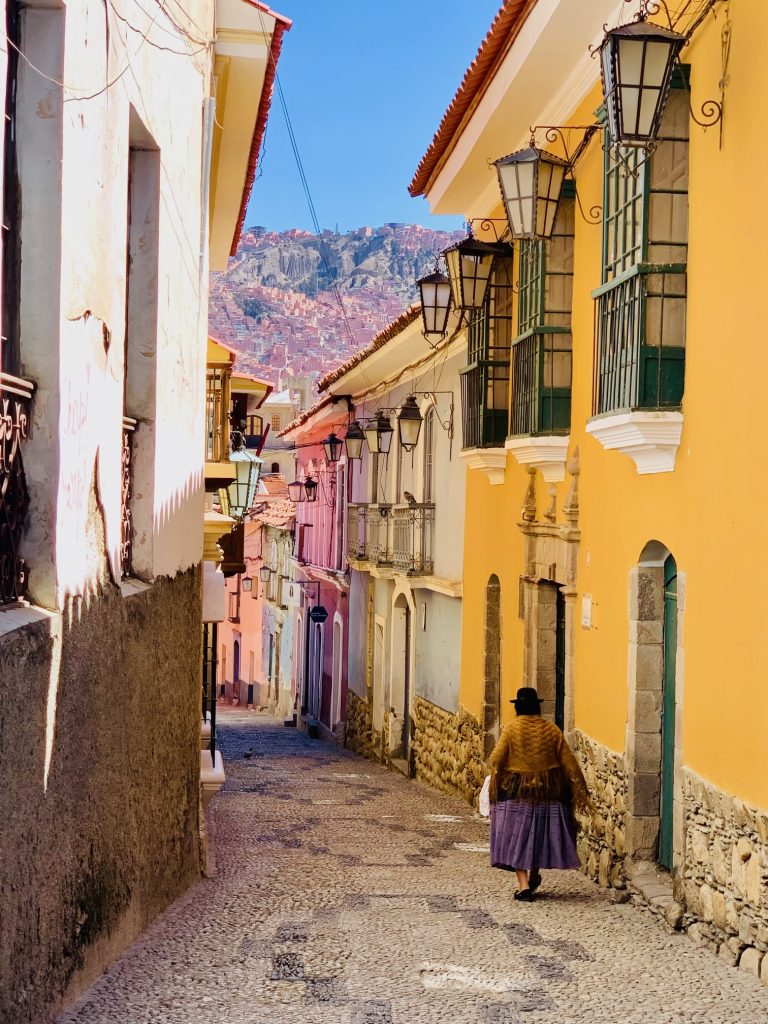
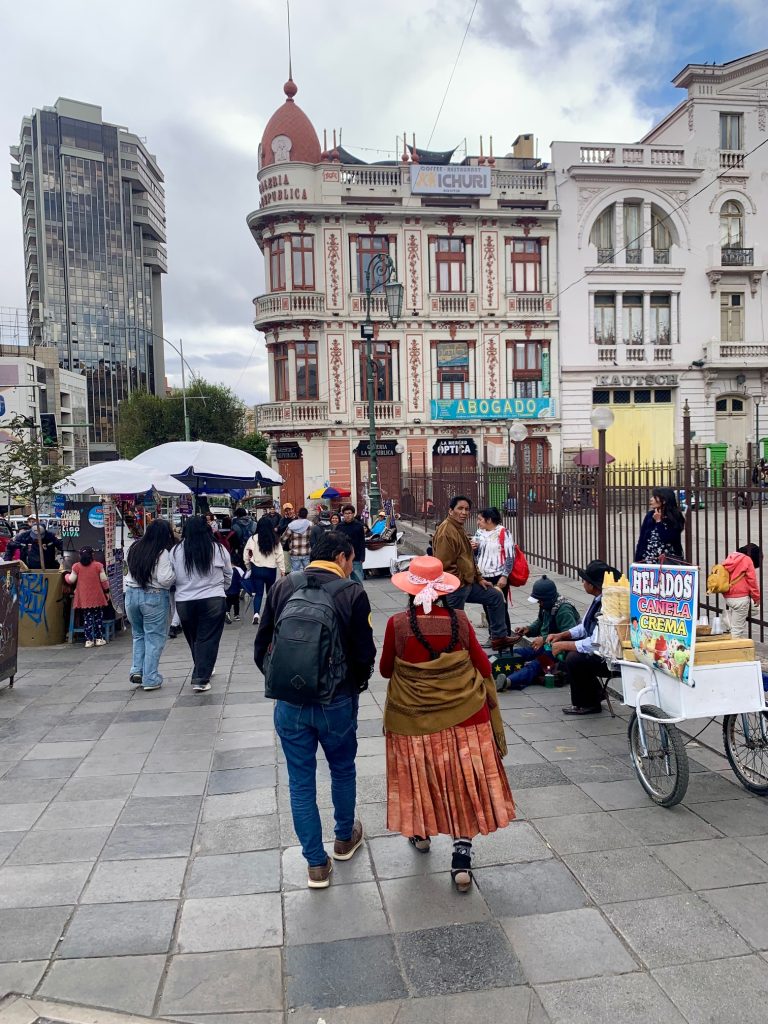
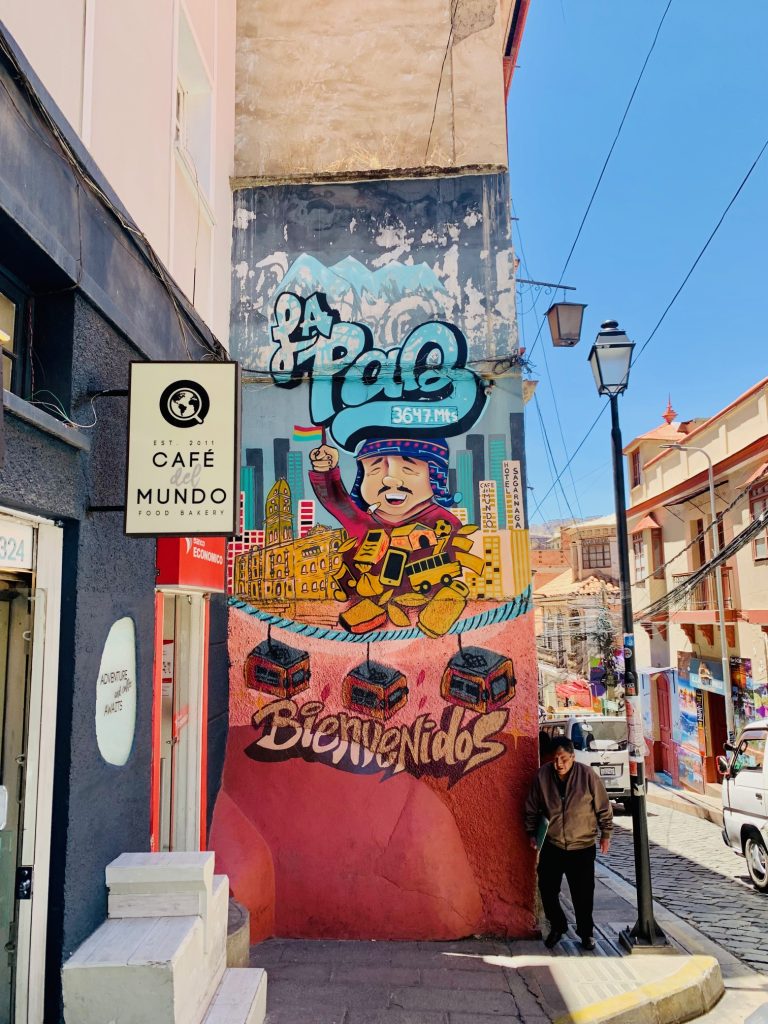
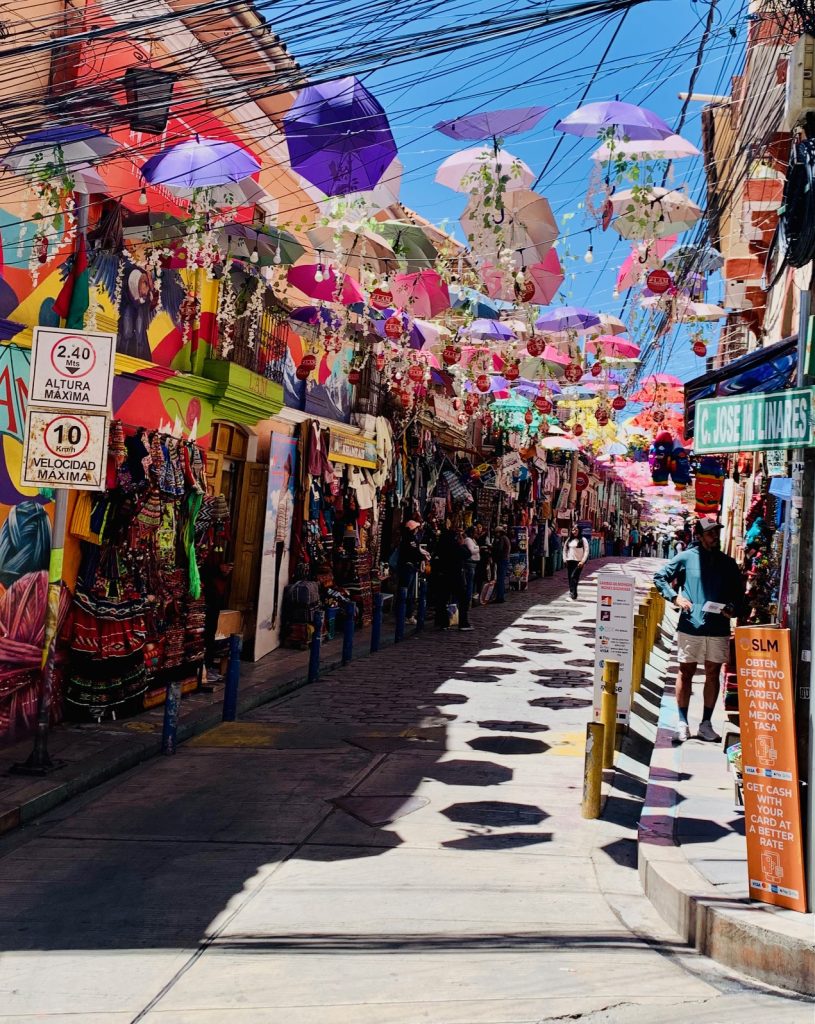
It has been a couple of decades since I was last in South America but I’ve finally made the trek to Bolivia. Dropping into La Paz city from the airport at 4000m the city of 1 million people feels like an engineering miracle. La Paz is spread up the steep sides of a valley bowl with thousands of multi-storey flimsy red brick buildings held together with daubs of mortar clinging to the valley walls. The lack of oxygen at 3600m is not the only physical challenge for navigating a city without any flat terrain! There is an engaging mix of tree-lined squares, churches and Spanish colonial architecture along with a buzzing tourist offering of cafes, tour outlets promising Andean adventure and colourful artesan and souvenir streets.
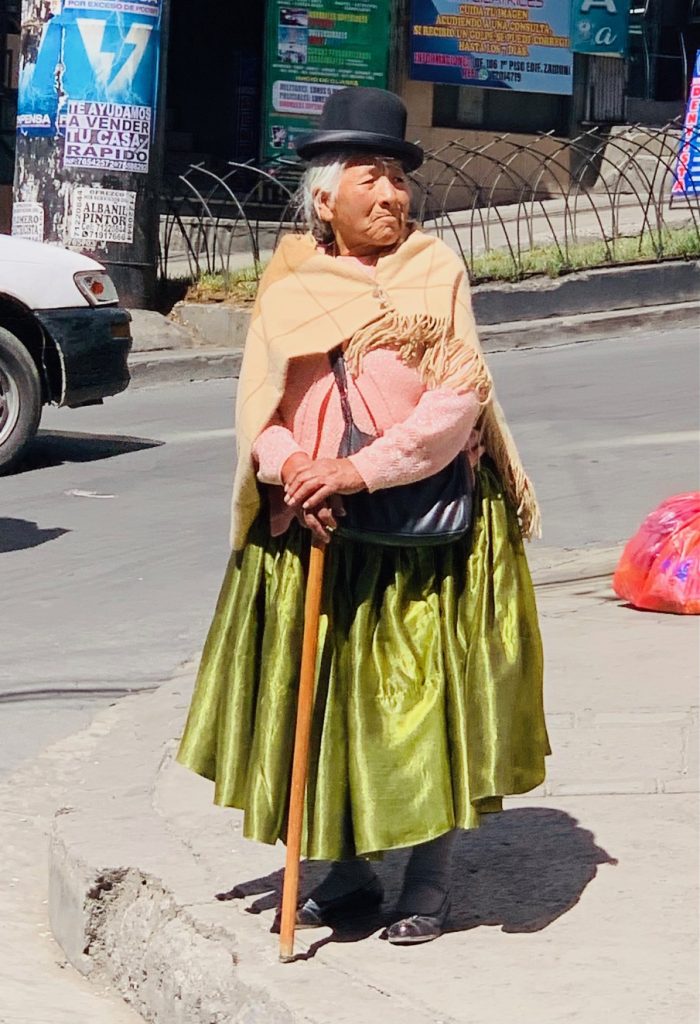
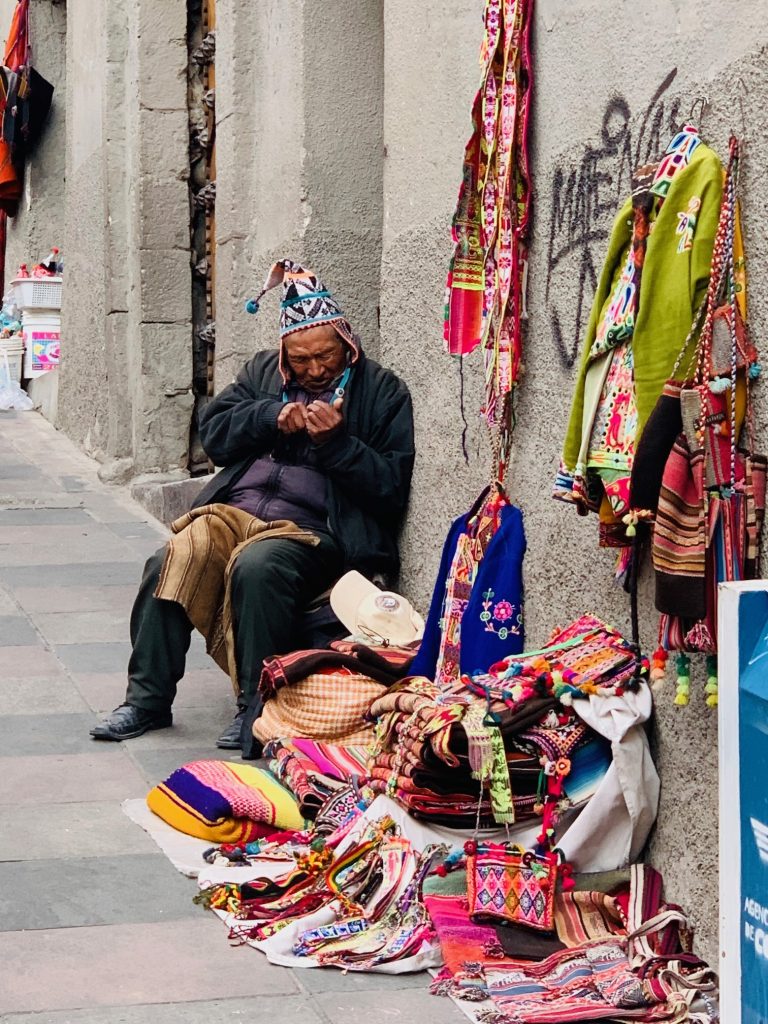
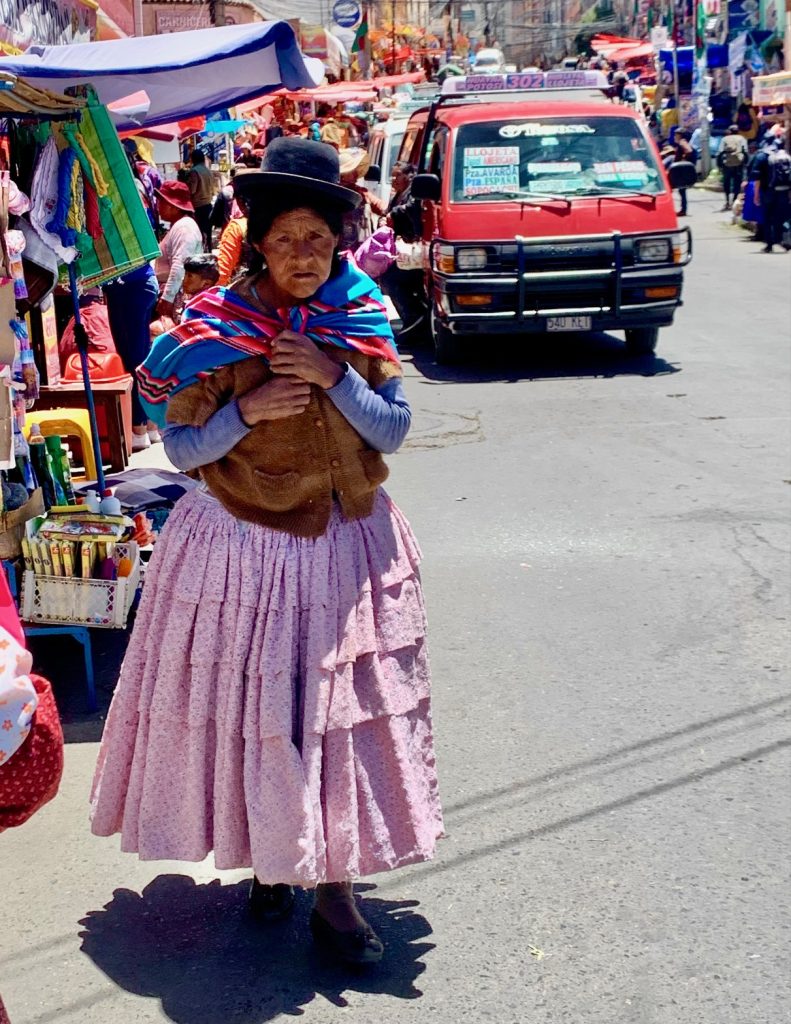
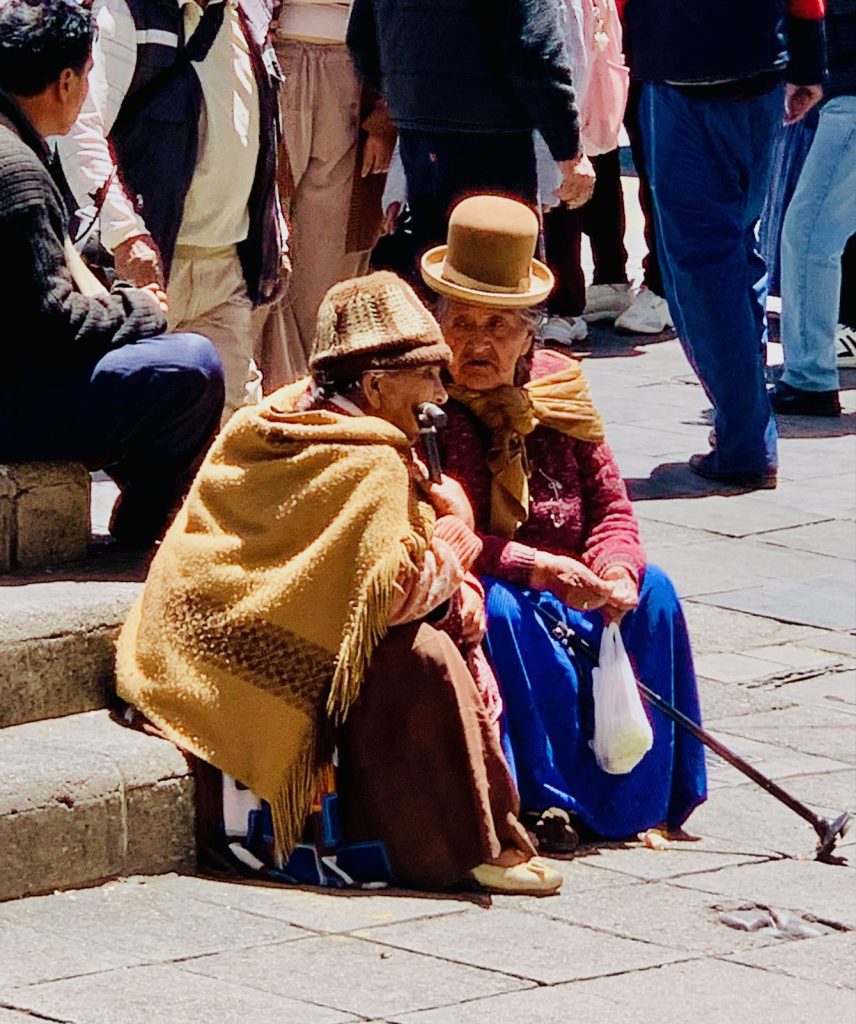
The cholitas will be my enduring image of Bolivia- the mestizo women born of Spanish colonialism who decided to proudly adopt the dress required of them to meet European expectations. You recognise them instantly with their wide skirts held out by stiff petticoats (that were designed to mimic a hoop dress), their practical apron, colourful ‘aguayo’ blanket to hold babies or wares on their backs and the little bowler hat atop their hairstyle of double braids. So utterly charming they are a challenge to chase up and down the steep La Paz streets to catch a candid photo.
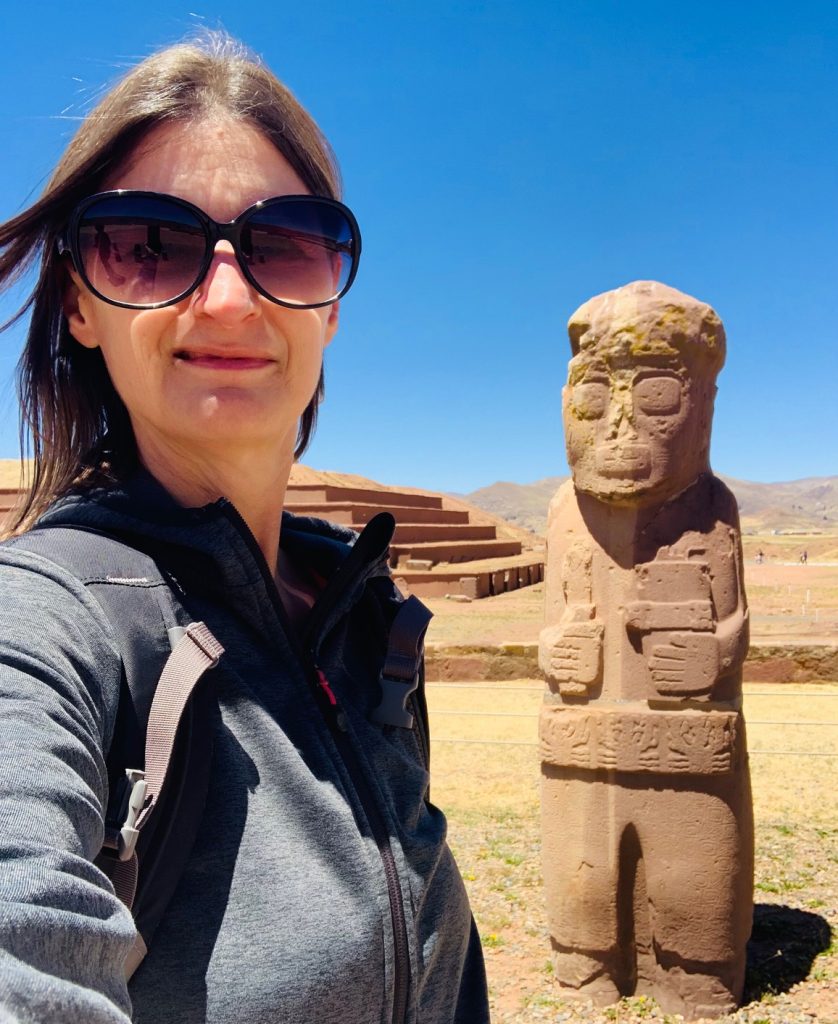
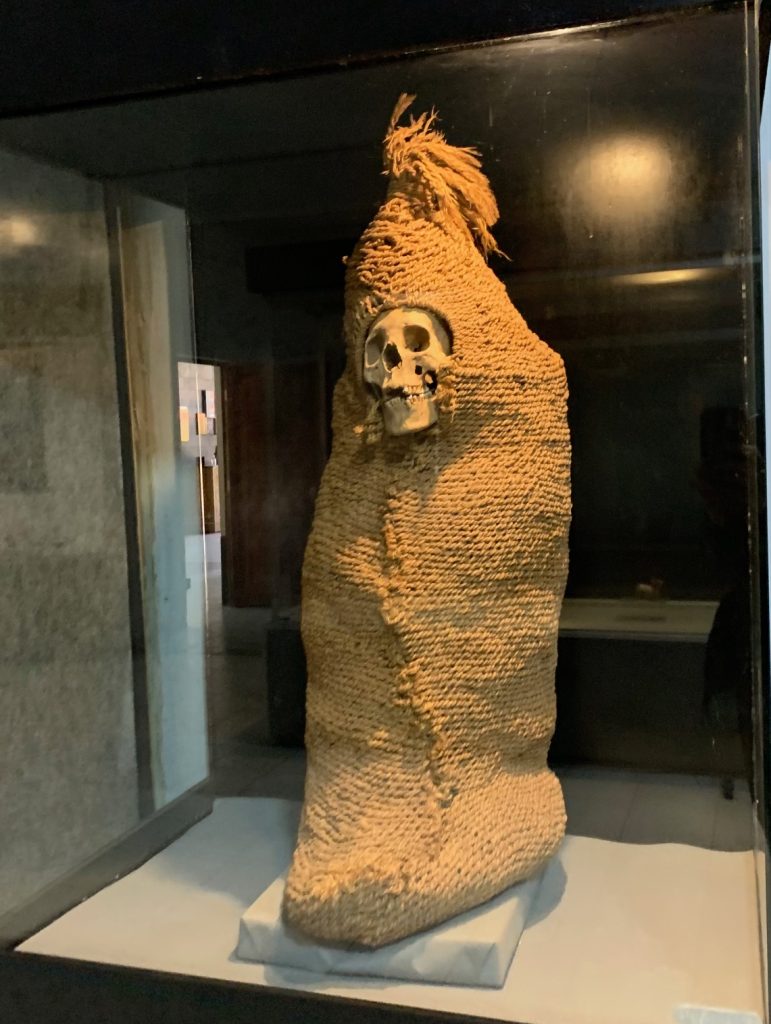
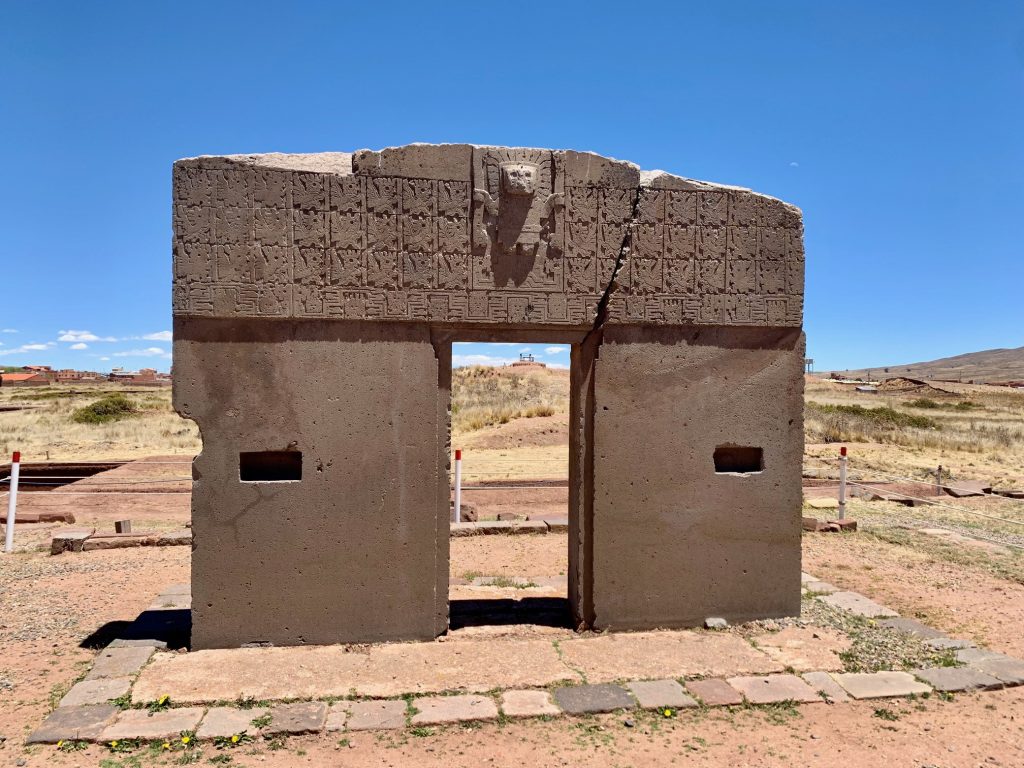
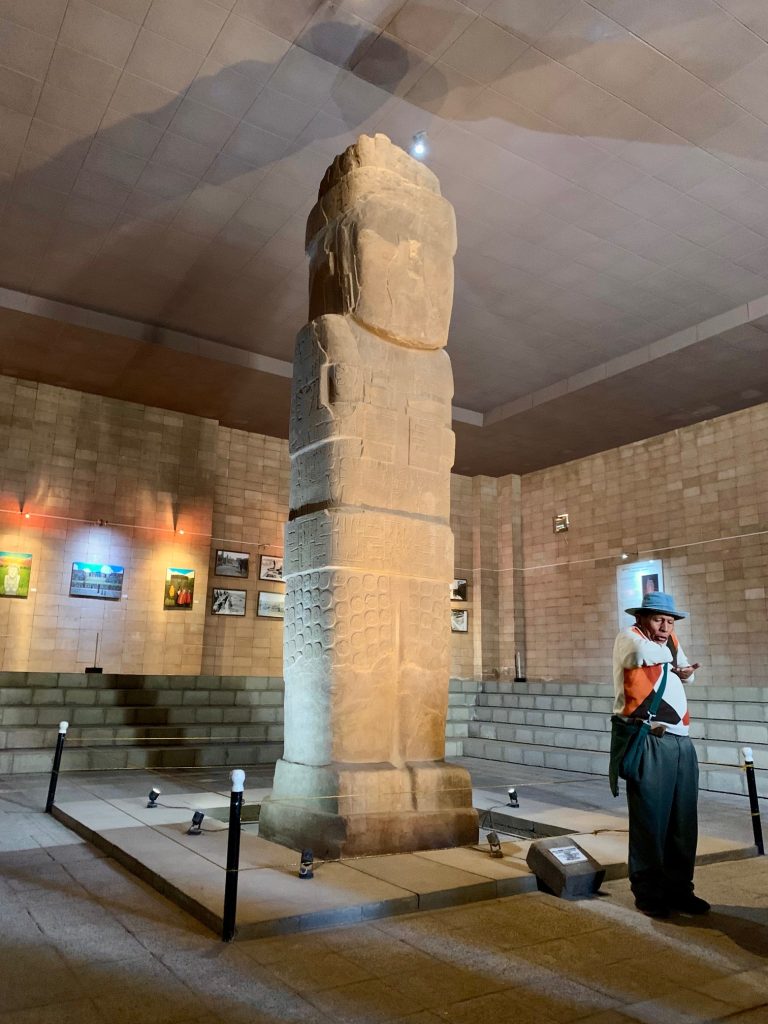
There are adventures to be had in Bolivia and I bounced around in a minibus approaching the border with Peru to visit the archaeological ruins of Tiwanaku – a civilisation that existed at least a millennium before the Incans and whose architecture and stonework likely influenced the construction of the more famous Machu Picchu. Some of the stone statues/ stelae are the largest ever discovered in the Andes with Pachamama measuring over 7m in height and sourced from a mountain 3km away. The figures are all depicted with decorative headbands, bracelets and belts and holding a snuff tray for hallucinogens in one hand and a chicha cup (fermented maize alcohol) in the other. It seems partying hard is not a new thing!
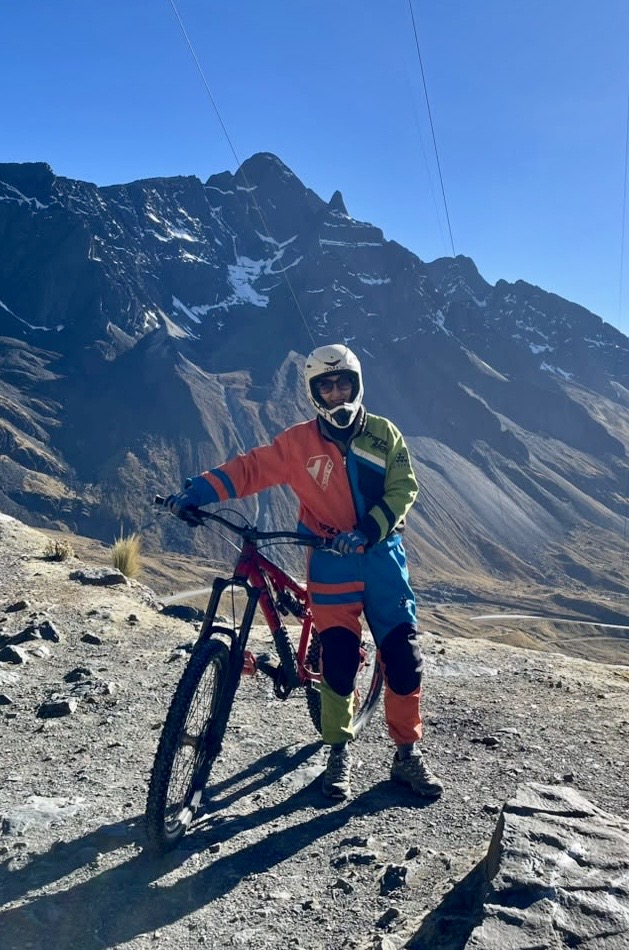
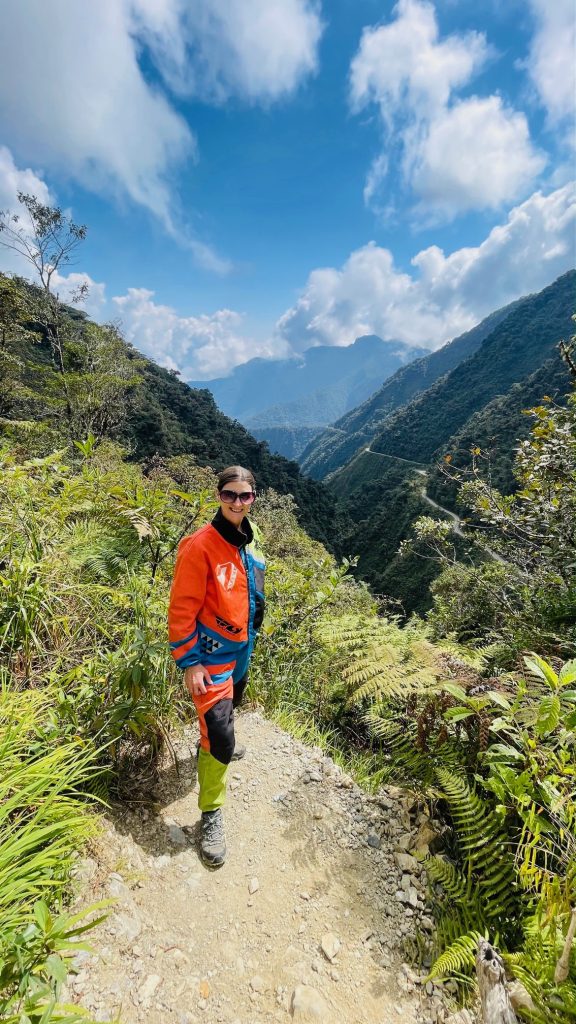
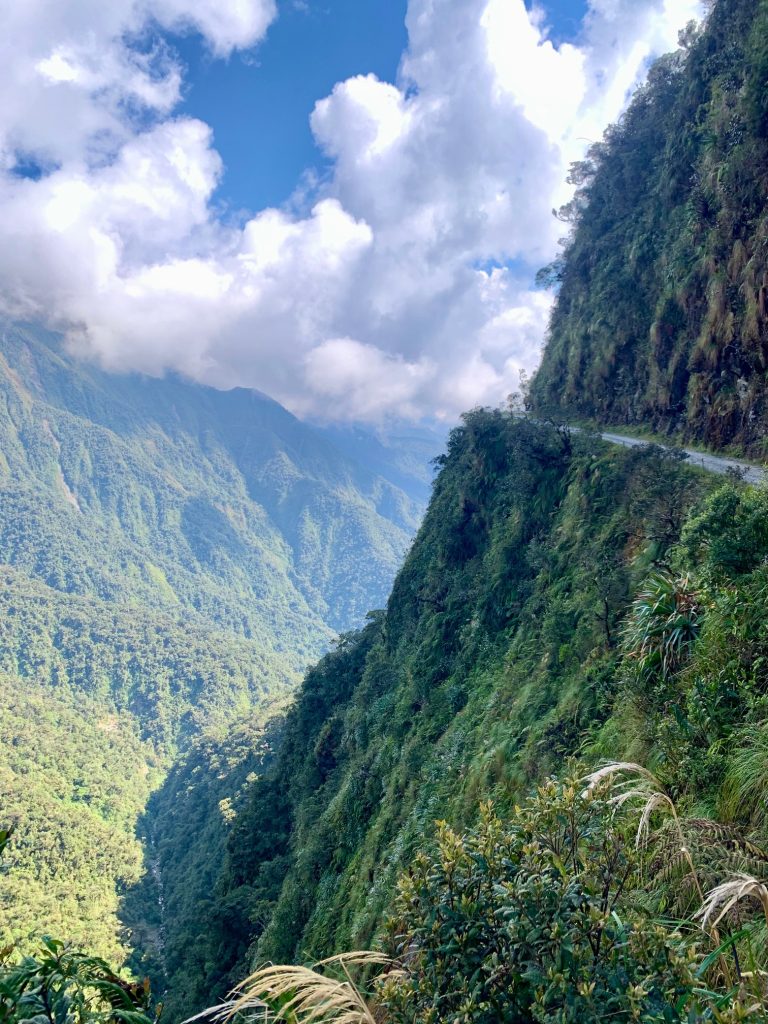
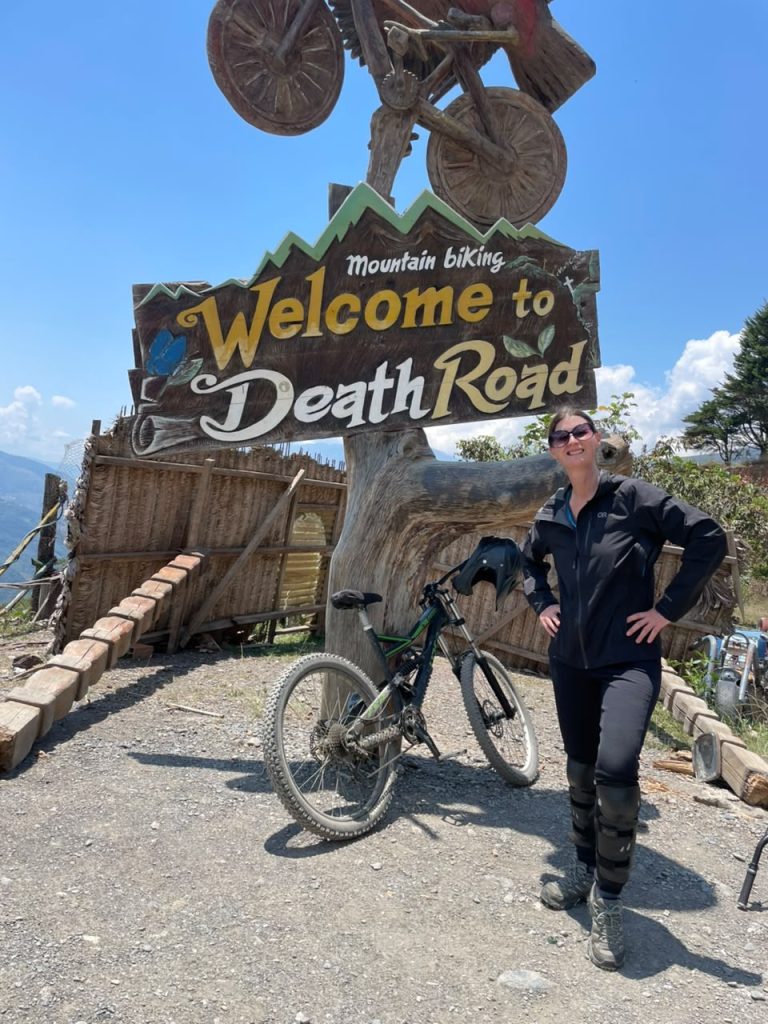
Call me crazy – it seemed like a fun idea to cycle down the infamous Death Road in Bolivia. It was treacherous and a shave too close to life-threatening. The old Yungas Road was carved out of the mountain side and opened in 1937 as the only connection between La Paz city and the agricultural Yungas valley 3500m below! Needless to say it was a narrow track with steep drops of over 1000m from the road edge. An average of 200 to 300 people died in accidents every year on the road before the new highway was constructed and the road closed to traffic in the 1990s. It will definitely go down as one of the more stupid decisions in my life to bounce and slide on a mountain bike down a steep rocky, gravel track for 30km with instant death a few metres away. I’ll take my mountain vistas with a sturdy pair of hiking boots again next time! Hasta Luego Bolivia!